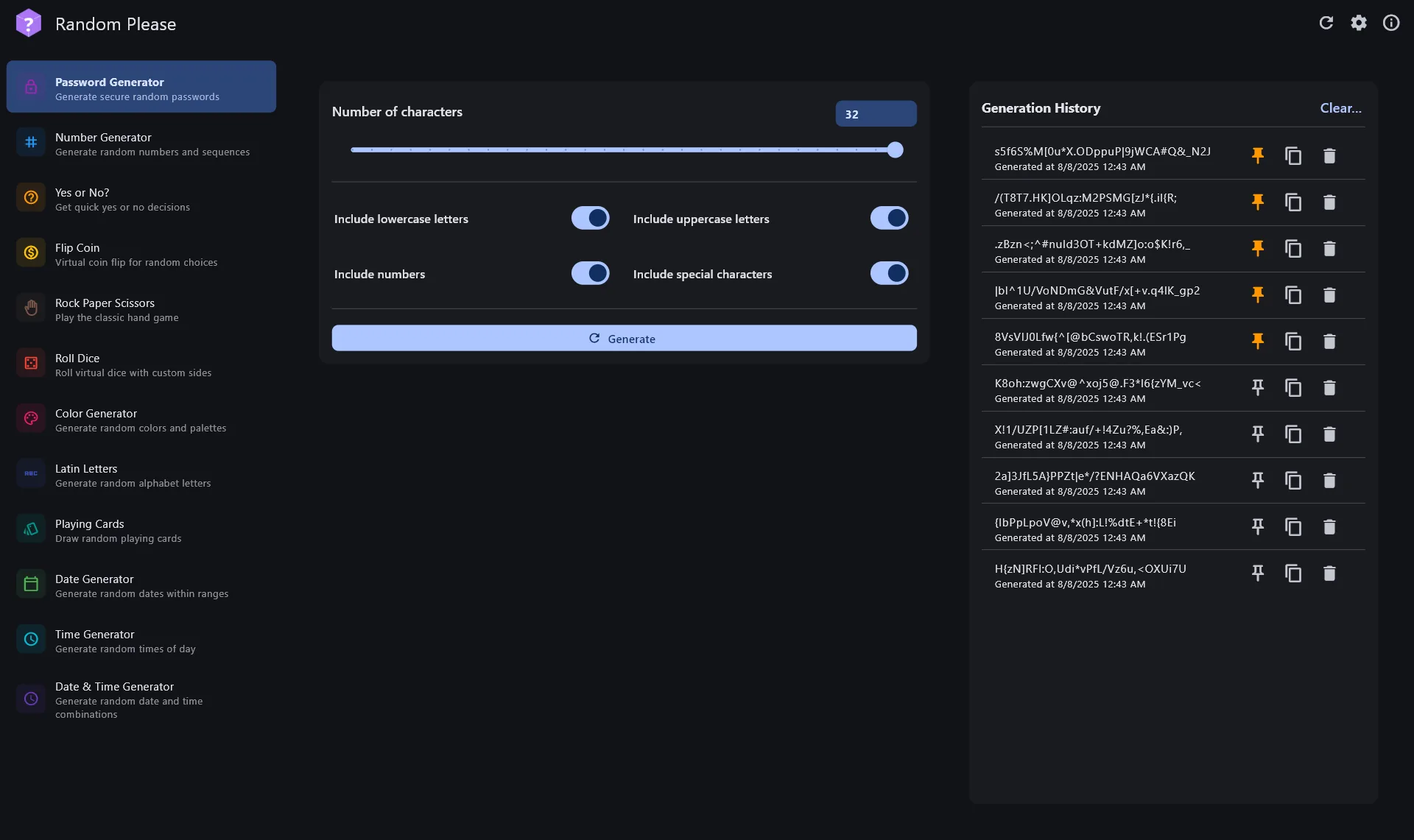
Prefer the Releases .7z
Prefer GitHub Releases for TrongAJTT/random-please when you want a Windows random number generator binary you can name on a ticket. The primary asset is Random-Please-*-windows-x64-release.7z. Extract anywhere you control, then launch random_please.exe.
No winget package id was found on this review date. Do not invent one. Keep the Releases door as the verified Windows path for this guide.
Steps
- Open Random Please releases and confirm the tag lists
Random-Please-*-windows-x64-release.7z. - Download the .7z from that tag.
- Extract every file into an empty folder.
- Run
random_please.exefrom the extracted tree. - Set integer ranges, then prove one known mass.
SmartScreen wording on first launch is UNVERIFIED here. Prefer the Releases URL you typed yourself. Safe habits: download safe. First hour: installed.
After install
Write the filename beside the Windows version on the machine ticket. Prefer the same zip pattern for the next bump. Update path: update uninstall. Keep browser random tools only if a locked browser still matters. Switch notes: switch from web.
Common mistakes
Downloading a second portal copy when the first run is blocked. Expecting a thin exe without the data folder. Skipping the first known-range check. Inventing a winget id. Mixing an old portable folder with a new extract without notes.
Why the .7z includes DLLs
The Windows build ships Flutter runtime pieces beside random_please.exe. Treat that as expected packaging for this random number generator client, not as a wrong download. Releases map: releases.
Prove the generation
Type a mass from a classroom draw you already trust. If the result looks wrong, re-extract before blaming unit names. First run: first run. Hub: random number generator.
Practical notes for shared desks
Write the Releases URL and the extract path on the machine ticket before you leave. Shared labs lose time when the next person cannot name the approved random number generator binary. Prefer one folder per tag. After a successful generation, create a shortcut only to random_please.exe inside that folder.
When onboarding, repeat a known-range check rather than trusting a screenshot. If results disagree with a classroom draw beyond rounding, re-download from GitHub Releases. Keep adware portals closed so the habit stays boring and ticket-friendly.
Network policy matters. The first fetch needs github.com. After that, offline random number generator work should continue without calling home. If GitHub is blocked, arrange an approved copy of the same asset rather than a random generator site.
For classrooms, a one-page sheet that highlights integer ranges fields reduces support questions. Students still type their own numbers. Link the sheet to the Releases URL and the internal extract path.
Backup is copy-the-folder for the Windows .7z. Include DLLs and the data directory. Restoring only the exe fails. Keep Android APK notes separate from the Windows folder layout so updates do not collide.
Desk workflow after the binary works
Once Random Please answers a known mass correctly, keep the window available for the rest of the shift. Shipping, cooking, gym logs, and lab notes all ask for the same random number generator proof. A local client means you are not blocked when a browser calculator fails to load scripts or when guest Wi-Fi drops mid-check.
Teach teammates to filter generator lists rather than scrolling forever. Set clear minimum and maximum integers before you generate. If a result looks wrong, confirm duplicate settings and range bounds before you invent a custom process.
Combined units are part of Random Please’s pitch. Everyday random number generator work rarely needs them on day one. Prove the simple pair first. Only then explore more complex unit strings when a job actually requires them. That order keeps support tickets short.
Theme changes can wait until the generation habit is boring. Light and dark screenshots on the vendor site show the same From and To structure. Pick the theme that matches the room lighting after the first proof succeeds.
Ticket language that survives audits
Auditors and future-you both want the same three lines: the Releases URL, the .7z or tar.gz filename pattern, and the folder or install prefix. Add the review date when your org requires it. Do not hard-code a dotted version in wiki prose when the live panel already injects the current release.
If two desks disagree on results, compare unit selections before comparing binaries. A maximum versus a different maximum definition will look like a software bug. Random Please’s unit database travels with the extract; keep extracts intact so definitions stay consistent across the lab.
When a new tag appears, extract beside the old folder, prove one generation, then retire the old tree. Never merge DLL sets. Uninstall on Windows is delete-the-folder for the portable zip. Linux uninstall follows whatever prefix Flutter source build used.
What this guide will not do
This factory stays one-slot for the write phrase random number generator. It does not create sister hosts for other generation searches that share the Random Please binary. Soft-parked unrelated ideas stay parked. Package manager ids that were not found stay undocumented rather than invented.
External links leave for a new tab to GitHub, random_please.trongajtt.com, or primary registries. Same-host footer links cover releases, GitHub overview, download safety, and guides. Prefer those routes when you need more detail without leaving the install story.
Related reading here
Start from the random number generator hub when you need the live install panel. Use releases for asset names, GitHub for repo context, and download safely when portal mirrors appear in search. First hour: installed. Machine chooser: for this computer.
Frequently asked questions
Does this guide cover random number generator on Windows?
Yes. It maps Random Please from GitHub Releases using Random-Please-*-windows-x64-release.7z, a full extract, and random_please.exe for the Windows random number generator path described in these pages, without inventing package manager doors.
Is winget required for random number generator?
No. No winget package id was found for Random Please on the research date. Prefer the Releases .7z and document that choice on the machine ticket when you install this random number generator client.
Where should I go next for random number generator?
Return to the home pillar, the releases file map, and the first-hour checklist so the next random number generator update uses the same official GitHub Releases door you already proved on the desk.
Is Random Please free for random number generator work?
Yes under GPL-3.0. GitHub Releases assets for Random-Please-*-windows-x64-release.7z have no paywall for the desktop client used in this random number generator guide, and source stays public on TrongAJTT/random-please. Prefer TrongAJTT/random-please Releases for Random-Please-*-windows-x64-release.7z, extract every file, and run random_please.exe when the task is a local random number generator generation on Windows. Keep invented winget ids out of scripts because none were found on the research date.